
Driving Tips: Steering Control

$(KGrHqZHJ!wFBtR+el75BRY0lb(pPw--_35

In an earlier post, I wrote about rules every driver must follow. On that theme, I want to create a new series of posts in which I share advice about different aspects of driving. This post is directed towards learners and offers tips on one of the most crucial elements of good driving: steering control. From my personal experience, this advice has benefited many learners and I would like to extend it to a broader audience.

  • Hold the steering gently (using just the weight of your arms) to keep the car straight. The car always goes straight when you leave the steering wheel. Sometimes, because of road curvature, some cars go left or right depending on the road surface. This slight pulling to the left or right keeps the driver awake!
  • Always keep in mind which side of the steering wheel you are applying more pressure. You need to keep the car straight by applying more pressure with one hand. For example, if the car is pulling left, you have to apply more pressure with the right hand to keep the car straight and vice versa.
  • If you know that the car is pulling to the left side, and you want to turn towards the left side, you just have to release pressure on the right hand, and the car turns left automatically. If the turn is sharp, apply a little pressure on the left hand to turn the steering and vice versa.
  • If you know that the car is pulling to the left side and you want to turn right, you need to put a little extra pressure on the steering wheel with your right hand, because you are already applying some pressure to keep the car straight. Consequently, you have to apply a little extra pressure on the right side and vice versa.
  • If you understand this point, you can control the steering with one finger – that much pressure is enough.
  • You just have to hold the steering with your grip. In an emergency if you hit a pothole, speed breaker, wet patch or slush, the steering goes haywire. At that time you have to hold the steering firmly in a straight position.
  • If the road surface is perfectly smooth like a runway, and if the car is in excellent condition, and if the wind direction is also perfect, then the car will go straight even without holding the steering.

All learners must internalize these points. To some, it may come intuitively, and to others, with practice. For all, learning these points can make driving significantly easier, and I hope these tips prove useful the next time you are on the road.

In the future, I will share tips about other aspects of driving as well.
Posted in Advice | Leave a comment

Driving is now Child’s Play

In early 2014 I began working on a project that leveraged my automotive knowledge to convert manually operated cars into semi-automated ones. The project grew into its current form where the car is operated via remote control. It can be further enhanced to run with GPS and proximity sensors, which is presently a work in progress.

I am aware that Google, Audi, Tesla and a few others have already come out with their automated car versions and have spent millions on R&D and testing. Mine in contrast is a very low cost solution that I will work on continuing to enhance.

I hope you enjoy the video and I welcome any suggestions! To clarify, that is indeed a real car and not a toy one!

Posted in Advice | 2 Comments

Motor Insurance: Take Advantage Of No Claims Bonus and Help Reduce Illiteracy

Image

Did you know you can hold onto your motor insurance policy even after you sell your vehicle? No one tells about you this.

If you never make  any insurance claims – be it for accidents or otherwise – you are eligible for a no claims bonus (NCB). This will progressively reduce your premium when you go for renewal.

For example:

___________Value of Car ______NCB_______Approx Premium

First Year             4 Lakhs                      0                          Rs. 12500

Sixth Year            2 Lakhs                     50%                     Rs. 3500

Say after the sixth year you want to buy a new car worth Rs. 8 lakhs. The premium for the new car will be approximately Rs. 28000. However, if you retain the old car’s policy and get it transferred to the new vehicle, you will be paying only Rs. 14000. For a long time I was unaware of this because no-one told me, neither showroom sales executives nor insurance agents. Perhaps it’s because they may lose commissions. I don’t know.

One other point: Please go through your policy thoroughly to understand exactly what is covered and what isn’t. You might otherwise be misled into taking the cheaper option only to realize later that natural disasters like earthquakes and monsoon damages are not covered. This would be a disaster made by you if your car has just suffered a hydrolock. (How to avoid hydrolocks)

Most importantly: If you are eligible for NCB, please retain the old policy and don’t give it away with the car. You can make significant savings, enough to pay for the education of a child if you are so inclined.  Keep this point in mind when you are buying a car and perhaps you can contribute to reducing the illiteracy percentage in our country.

Posted in Advice | 1 Comment

Replacing Brake Rotors (Discs): When and Why

Image

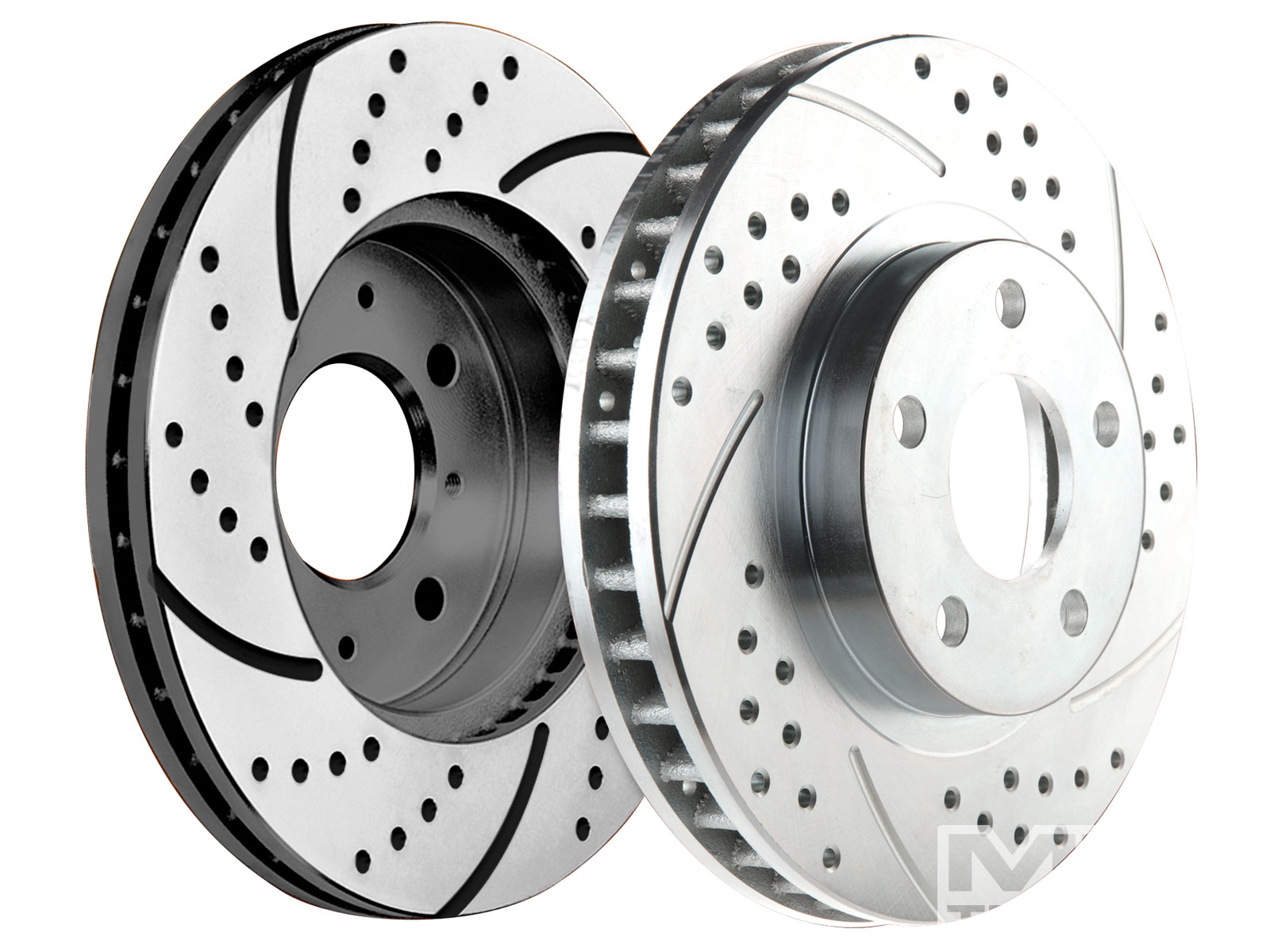
All the automobile advice I give – on this blog and off it – is approached keeping two priorities in mind: Driving safely, and preventing the needless expenditure of money. Functioning brake rotors are important for safety, however, replacing them costs a lot of money. Therefore, it is important to to know when replacement is necessary, and when replacement is simply a waste of money. This is what I will discuss in this article.

Recently, my friend told me that he got his car’s brake rotors replaced at the car’s third service, after it had covered a distance of 30,000 km. This came to me as a huge shock, because I was always under the impression only high end car garages replaced brake rotors along with brake pads. This car costed under 8 lakhs – certainly not high end. In my view, replacing brake rotors so early is a criminal waste of money. Donating that money to a charity would have been a better use of it. I am not saying that one should compromise on brakes, because brakes are crucial to safety. However, in this case, those rotors would have comfortably lasted at least 60,000km, because there was no wear and tear. In my own experience, I have never had the rotors on my cars replaced before 100,000km. Only if the discs are made of cheap material do you need to get them replaced every 30,000km. Other reasons are:

  1. Driving with worn out brake pads. This leads to excessive wearing out of the rotors because of metal to metal contact.
  2. Violating highway speed limits (going above 150 km/h) and braking excessively.
  3. Driving in coastal areas (more rust).
  4. Off-road vehicles are more exposed to damage from dust particles.

One key piece of advice when deciding whether or not to replace rotors is to not rely only on distance covered. Instead, ask for the manufacturer specified minimum thickness limit and measure the rotors yourself (with a micrometer, not vernier calipers). Some drivers are so careful that even their brake pads last for 80,000km. So don’t only go by distance. If the thickness as measured by you is less than the limit specified by the manufacturer, go ahead and get the discs replaced.

Remember, the front rotor always wears out more than the rear. Roughly, you would need to replace the rear rotors half as often as the front rotors. Above all else, please don’t get them replaced blindly.  

Posted in Advice | Tagged , | 2 Comments

Wheel Alignment: Why you should get it done and When

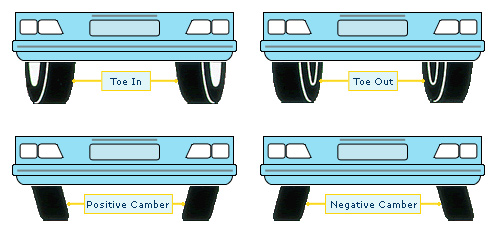
Image taken from computechauto

In your car, do you know which component requires the highest expenditure (after fuel)? The tyre. This is why wheel alignment is important. But what is just as important as the why is the when. When should you consider wheel alignment?

  • The car is drifting to one side when you think you are driving straight. Here, first check the tyre pressure on the front tyres, because the car will drift towards whichever side has less tyre pressure.
  • You are driving straight but the steering wheel is not centered. This happens when you hit something hard.
  • You notice that the tyres are wearing out unevenly. Generally, the front tyres will wear out quicker than the rear tyres, because of the engine weight in the front. Because of this, I believe it is a must to rotate the front and rear tyres every 10,000km.

Wheel alignment is the process of making sure that the wheels are perpendicular to the road and parallel to one another.

Alignment changes only when you hit something hard enough to actually bend the metal. As this does not happen very often, having the wheels aligned every 5000 km is a waste of money. On my cars, I go in for wheel alignment every 20,000 km. In general, there is no point getting wheel alignment done before 10,000 km, unless you notice one of the above symptoms. Between 10,000km and 15,000km is a good baseline to avoid suspension wearout, save fuel and reduce pollution.

Some cars will have wheel alignment for both the front and rear wheels, while others have wheel alignment only for the front two. Make sure you know whether your car requires 2 wheel or 4 wheel alignment. Otherwise, some garage owners may take you for a ride.

There are only two instances in which you should consider an unscheduled wheel alignment (apart from the situations described earlier): If you notice abnormal tyre wear, or if you think you hit something hard (for example, if your car goes over an uncovered manhole). In the second case, get it done immediately.

In all other situations, carefully observe the handling of the car, and check for uneven tyre pressures or tyre wear before you think you need to get the wheels aligned.

Posted in Advice | Tagged , | 5 Comments

Chevrolet Captiva: Engine Overheating Problem

Captiva

Not too long ago, my nephew told me his Captiva was experiencing engine overheating problems. He wanted to know whether he should sell the car or keep it. I then thoroughly tested the car for around 1200km and made certain observations which I will detail in this post. There is indeed an overheating problem, but it can be avoided if you follow these points. Please also refer to my earlier article on how to detect and avoid engine seizures.

  • The car’s handling is excellent, and the suspension is smooth.
  • On the Bangalore highway, when I drove at 140 km/h in 4th gear continuously for 30km, I noticed the temperature gauge increased from the constant point by 1 mm. Seeing this, I eased off to 100km/h, and the temperature came back to normal.
  • Upon repeating the experiment, the same problem occurred once again. Because of this observation, I was able to save the engine. Many drivers fail to notice the shift in the temperature gauge and end up damaging the engine.
  • Note that I am not saying it is a fault of the driver. There is definitely a problem in the Captiva engine, and it could be any of the following: 
  1. The Engine Cooling System is not designed to withstand 150 bhp.
  2. Improper design or poor quality of radiator, intercooler, thermostat and radiator fan.
  • When I test drove an automatic Captiva, I did not notice this problem because unlike manual gearboxes, automatic gearboxes don’t allow you to drive at 140 km/h in lower gear, so you will be driving at 140 km/h with lower engine rpm.
  • Captiva owners who drive only in the city will be unlikely to suffer this problem, and they will be happy with their vehicle. This problem will affect primarily highway drivers who go fast.

On the whole, the vehicle is fine, but because of the above problem, I recommend automatic over manual (unless you are fine with not pushing the car). To all Captiva owners – please keep these points in mind, and don’t think about selling the car because of this problem because you will not get good resale value. Just think of the Captiva as having 120bhp instead of 150bhp, and you will not encounter this overheating problem.

Posted in Advice | Tagged , , | 1 Comment

How to choose tyres that maximize safety and comfort

Image

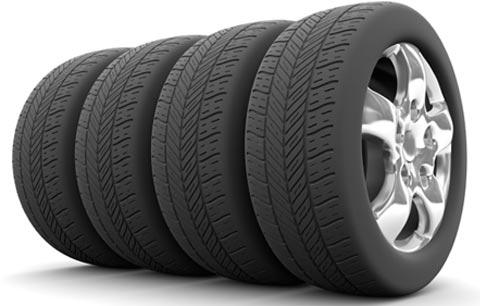
It is no secret that tyres are crucial components of a car – just look at what is happening in Formula One these days. While there is no comparison between those tyres and the ones on our cars, it is still important to choose the right tyres for your car if you want to maximize safety and comfort.

To begin with, you have to choose between tubeless and tube tires. For the reasons listed below, I recommend tubeless:

  1. Tubeless tyres do not burst, since there is no tube.
  2. The tube valve of tube tyres will get cut if you drive with low tyre pressure. This is not an issue with tubeless tyres. So for extra comfort, you can run the car with a little lower tyre pressure. There is no risk.
  3. With tubeless tyres, If the tyre gets punctured by a nail, you can still reach your destination. With tube tyres, you would only be able to travel a few meters.
  4. When running with tube tyres, you will always have to carry a spare tyre and jack. With tubeless tyres, the jack and spare would be needed only if you hit a stone directly, which is rare. However, on Indian roads I would never travel without a spare tyre.

With my experience, tubeless tyres are much better for safety and comfort. But it seems some drivers get a flat tyre immediately after switching to tubeless, and then think that tube tyres are better. I say this is a coincidence. Stick with tubeless.

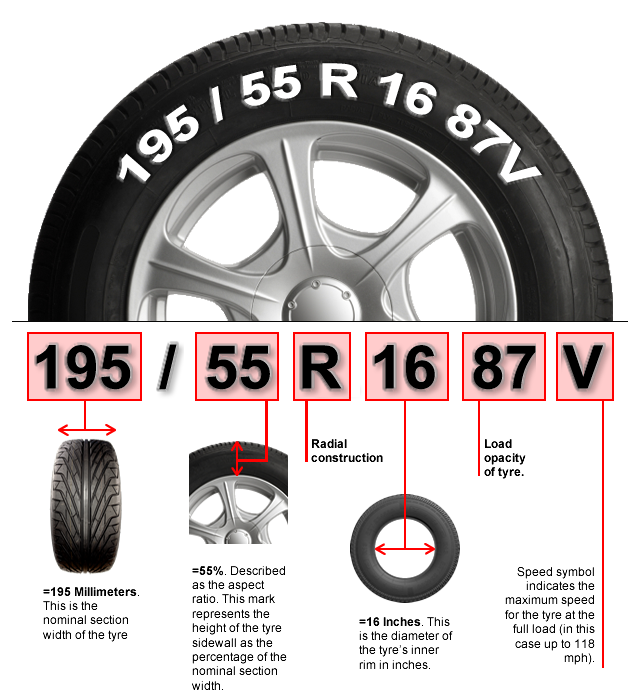
My next piece of advice is this: Choose higher profile tyres. They are more suited to Indian roads. To understand what tyre profile is, it is necessary to understand the tyre code that is molded onto the sidewalls of tyres. This code is easier to understand visually, and the below image does a good job of explaining it:

Image

Image taken from http://heffernantyres.ie/

In the above image, the tyre profile (or aspect ratio) is 55. I recommend a minimum of 50. The higher the profile, the more rubber there is between the ground and your car. So now you know why I advise higher profile tyres: more rubber, more cushioning.

Run flat tyres are the opposite of what I recommend (on Indian roads). These tyres are low profile, are used in high end cars, and are very good only at high speeds of above 200 kmph. But the speed limit on our highways is something between 80kmph and 100kmph, I think. So why bother? To properly use these tyres, the road must be like a runway. Instead, it’s better to switch to normal high profile tubeless tyres. The comfort will noticeably and considerably improve. Autoguide has a very good article on the pitfalls of run flat tyres. Please read it and be sure to take a look at the comments section also.

So, there you have it: For maximum safety and comfort, go with tubeless, high profile tyres (minimum profile: 50) and avoid run flat tyres.

Posted in Advice | Tagged , , , , | Leave a comment

How to save your car from a heart attack

Image

If oil is to the car what blood is to the human body, then the engine is the heart, and an engine seizure the equivalent of a heart attack. Luckily for your car, potential engine seizures are easier to detect than potential heart attacks. Here, I will describe a simple method you can follow to to monitor the health of your car’s engine. It involves keeping a tab on the temperature gauge, and is a technique I have used often in the past to save many engines. Indeed, this principle applies even to racing cars.

  • When you start your car for the first time in the day, observe the temperature gauge. It should be at the minimum level.
  • After driving for 5-10 minutes, check the gauge again. It should now be at the halfway point. If the design of your gauge shows numbers, it should be at 80 degrees Celsius. Whatever it is, remember this point on the gauge. It differs from car to car.
  • After reaching this point, the gauge must remain constant throughout the journey, whether you travel 10km or 1000km.

If at any time the gauge goes beyond the constant point you have been observing everyday (even by 1 mm), it is a signal that there is a problem with the engine. Do not think the gauge has to cross the red line before you should get worried.  The problem could be:

  1. Driving without coolant.
  2. Malfunctioning thermostat.
  3. Defective water pump.
  4. Clogged radiator.
  5. Defective radiator fan.
  6. Defective radiator cap.

Due to any of the above problems, the engine will slowly start to overheat. So, if you notice at any time that the gauge has crossed the normal point, you should take the car to the workshop as soon as possible. If not near a workshop, turn the AC off. Most newer cars automatically shut off the AC when the temperature is above normal. This is another symptom of overheating. In fact, because of this, many drivers bring the car to the workshop thinking it has an AC problem, when it is actually an engine problem.

After turning the AC off, drive towards the workshop slowly, never letting the gauge reach the red line. If it does, stop the car and let the engine cool for a while before driving again. In this situation, it is better to have the vehicle towed. Never drive the car when the temperature gauge is at the red line. If you do, you are literally killing the engine. 

A major engine seizure can set you back by several lakhs. Thankfully, it is not difficult to detect the early warning signs of a malfunctioning engine. Just remember to keep an eye on the temperature gauge. Despite how important the gauge is, some cars do not have it. I would not consider buying such cars.

Posted in Advice | Tagged , , , | 2 Comments

Rules Every Driver Must Follow

"Use Dipper at Night"

“Use Dipper at Night”

At this point in time, driving on Indian roads is neither safe nor enjoyable. Too many drivers are ignorant of basic traffic rules, while even more do not even know what traffic rules are. It is a pitiful situation, one that requires more than a blog post to rectify. Nevertheless, here is a set of guidelines, as yet incomplete, that everyone driving on Indian roads should follow, not only for their own safety but also to improve the driving experience for everyone. Think of these as fundamental rules which you must be aware of. Some might appear to be very basic, but given what I see on the roads everyday, I think these are absolutely worth mentioning. Feel free to add your suggestions in the comments.

  • The fast lane in the new 4 and 6 lane highways is on the right. From what I’ve observed, it seems like 70% of drivers think it’s on the left lane. Furthermore, truck drivers switch on the right indicator when they want to signal for you to overtake. Those unfamiliar with this idiotic habit might find themselves stuck behind the truck for the entirety of the journey.
  • Use hazard lights only in an emergency, such as if your car stalls in the middle of the road, if you are changing the spare tyre on the road, or if visibility is poor due to fog. They are called hazard lights for a reason, yet I see some drivers using them to indicate that they are going straight at a cross road. What is going on in their head I cannot comprehend – surely having neither the left nor the right indicator on means you are going straight? What’s worse, these people are setting a trend. I see other drivers also following this, thinking it is correct.
  • Do not change channels or CDs on the music system while driving. As basic as it might sound, I’ve made this mistake in the past, and traffic in the city is too chaotic to take your eye of the road for a second.
  • Please don’t use high beams in city limits. This might make the road clear for you, but it blinds the oncoming driver, creating the possibility of a head on collision.
  • Those on two wheelers – please use your hand to indicate a turn like in the old days, in addition to the indicator light. In mid afternoon, even if you think you may have the indicator on, the light isn’t always clearly visible to rear vehicles. Alternatively, safety regulations must make it compulsory to use high visibility reflectors.
  • If at any time the situation arises when you must use the indicator switch and change the gear simultaneously, which one would you use? Such an instance might come about very rarely, but I would use the indicator first for the reason of safety. This situation applies to new generation manual vehicles, in which the indicator switch is on the left side. I’m not sure why any safety department is not looking into this.
Posted in Advice | 2 Comments

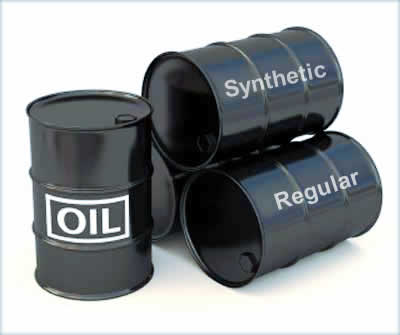
Synthetic Oil vs Conventional Oil: Your Choice

Oil is to the car what blood is to the human body. This is why choosing between synthetic and conventional (regular) oil is a critical decision. In this article, I will share my experiences in using these two oils. I have experimented on my cars with both – fully synthetic in one car, and fully conventional in the other. Both cars are diesel and turbocharged.

  •  With the car using synthetic oil, I changed oil every 20,000km. Manufacturers recommend changing between 5000km and 7500km, but I haven’t had any problems with changing after 20,000km. With the car using conventional oil, I changed the oil every 10,000km. It has now done over 300,000km with no problems.
  • By using synthetic oil, I was saving the oil filter, paying less money on labour charges incurred by changing the oil, and spending less time in going to the workshop.
  • However, synthetic oil itself is very expensive compared to mineral oils.
  • After 100,000km, I noticed that the car using synthetic oil consumed half a litre of oil every 5000km. The car running conventional oil did not encounter this problem.
  • The car using synthetic oil had a cleaner dipstick. But, there is a slight oil leak from the seals of the crankshaft and camshaft. Not a drop of oil leaked from the car using conventional oil.

Theoretically, there are a lot of advantages to synthetic oils. However in practice, my experience has suggested otherwise. Regardless, please do not change synthetic oils before 15,000km. Of course, for the sake of the warranty, you must do as the manufacturer recommends, but beyond that, it is your choice. You can work out the cost of both oils and decide which to use. Hopefully my experience has provided some practical benchmarks for you to compare and decide.

Posted in Advice | Tagged , , | 1 Comment